
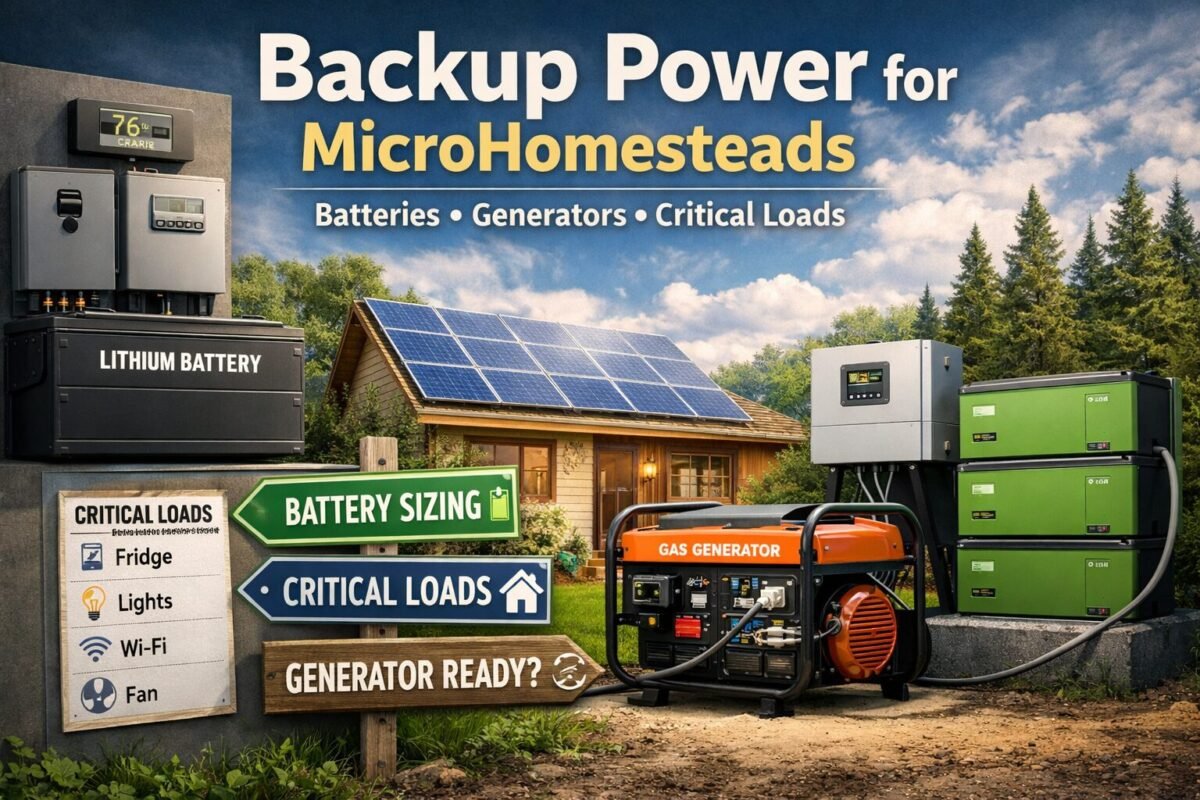
Backup power for microhomesteads made simple: list critical loads, size batteries (kWh vs kW), choose a backup power for microhomesteads setup, and decide if a generator helps—built for microhomesteads.
When considering backup power systems, it’s essential to recognize that each microhomestead will have different needs based on their specific circumstances. For instance, the number of occupants, the types of appliances used, and lifestyle choices all play a crucial role in determining the optimal setup. By assessing these factors, you can create a more tailored approach that enhances both efficiency and reliability.
When considering backup power for microhomesteads systems, it’s essential to recognize that each microhomestead will have different needs based on their specific circumstances.
Understanding your options for backup power for microhomesteads will significantly improve your energy independence.
Evaluating various backup power for microhomesteads solutions can help in planning for future energy needs.
Your backup power for microhomesteads strategy should align with the unique characteristics of your homestead.
Understanding backup power for microhomesteads can change your approach to energy management.
Furthermore, understanding the local climate can dramatically affect your choices for backup power. In areas with high sun exposure, solar panels could be a primary source of energy, while regions with consistent wind could benefit from wind turbines. Researching local weather patterns may provide insights into the best renewable energy systems to integrate into your microhomestead.
Another vital point to consider is the scalability of your backup power system. Starting with a basic setup may be more manageable, but it’s important to plan for future expansions. As your microhomestead grows, you may find that your energy needs increase, necessitating larger batteries or additional energy sources to ensure that you remain self-sufficient.
Incorporating backup power for microhomesteads solutions is not just about survival; it’s about embracing a lifestyle that values self-sufficiency and resilience. Each microhomestead is unique, often reflecting the personal values and goals of its owner. Consider factors such as your geographical location, climate, and available resources when planning your backup power for microhomesteads strategy. For instance, a microhomestead in a sunny region might prioritize solar solutions, while those in windy areas may look at wind turbines.
When I first started thinking about “backup power,” I thought it was all-or-nothing: either you buy a huge battery and power the whole house… or you do nothing and just hope the outage is short. In reality, backup power is a menu. The trick is picking what you actually need (critical loads), sizing your battery the right way, and only then deciding whether a generator makes your life easier.
TL;DR (Skim Box):
- Start with Critical Loads (what you must keep running).
- Size your backup in kWh (how long) and kW (how much at once).
- Choose your style: grid + battery, hybrid, or off-grid-ish.
- Add a generator only if it improves reliability or cost.
1) Start here: Critical Loads (don’t skip this)

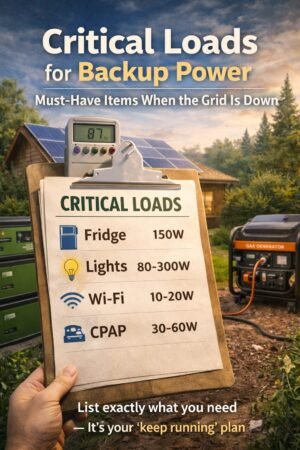
Backups for your microhomestead may include battery systems capable of supporting your backup power for microhomesteads needs.
This can help ensure your backup power for microhomesteads remains reliable during outages.
Additionally, incorporating energy-efficient appliances can significantly reduce your overall energy consumption. By choosing devices that use less power, you can optimize the effectiveness of your backup power solution. This not only saves money in the long run but also contributes to a more sustainable microhomestead.
If you do one thing, do this: write down what you actually need during an outage (fridge, internet, lights, fans, medical devices, etc.). This single list prevents the classic “overspend on a battery” mistake.
➡️ Read next: Critical Loads List for Backup Power (Real Examples + Watts)
2) Battery sizing in plain English (kWh vs kW)
Moreover, consider implementing a smart energy management system that can help monitor and optimize energy usage throughout your microhomestead. These systems can provide real-time data, allowing you to make informed decisions about when to use certain appliances and how to best utilize your backup power resources.
When making your critical loads list, think beyond just the basics. For example, if you have livestock or grow food, you may need to include water pumps or heaters in your planning. Each addition increases the complexity and cost of your backup power system, but it also ensures you maintain your microhomestead’s functionality during an outage.
Most people get tripped up because they size for “hours” (kWh) but forget “surge” (kW). Your fridge might sip power all day… then spike hard when the compressor starts.
Many microhomesteaders emphasize the importance of having backup power for microhomesteads in their planning.
Collaborating with other microhomesteaders can enhance your backup power for microhomesteads knowledge.
Backup power for microhomesteads is essential when considering long-term sustainability.
➡️ Read next: Battery Sizing 101 (kWh vs kW vs Surge, Explained Simply)
To grasp battery sizing better, let’s break it down further. If your refrigerator requires 1000 watts during a surge but runs at a lower wattage of 150 watts when functioning normally, you need to ensure that your battery can handle both requirements. A common method used by those in the microhomesteading community is to calculate the watt-hours needed for daily use and then size the battery accordingly to include a buffer for surge needs.
Community engagement is another crucial aspect of developing your backup power strategy. Connecting with fellow microhomesteaders can provide valuable insights, shared experiences, and even collaborative opportunities that may lead to a more effective backup power solution.
3) Pick a backup layout that matches your life
There are three common setups:
- Critical loads only (most practical + affordable)
- Whole-home backup (comfortable, usually pricier)
- Hybrid + load management (smart middle ground)
For those considering a hybrid setup, you might also contemplate how to balance your grid connection with renewable energy sources. Many microhomesteaders are exploring innovative solutions like net metering, which allows you to sell excess energy back to the grid, thus offsetting costs and enhancing the sustainability of your setup.
Have a comprehensive plan for your backup power for microhomesteads that covers all potential scenarios.
➡️ Read next: Critical Loads Subpanel vs Whole-Home Backup
4) Generator integration (optional, but powerful)
A generator can be the cheapest way to extend backup from “hours” to “days,” especially when clouds roll in. The goal is not to run everything—it’s to recharge and stabilize.
➡️ Read next: Generator + Solar + Batteries: Simple Integration That Works
Lastly, always integrate backup power for microhomesteads into your overall homesteading strategy.
Safety note: electrical work can be dangerous and code-regulated. This is educational only—use a licensed electrician for interconnection/transfer equipment.
Generators can also be a valuable resource for microhomesteads, especially during prolonged outages. Understanding the different types of generators—like inverter generators and standby generators—can help you select the right one. Inverter generators are known for their fuel efficiency and quieter operation, making them ideal for residential areas. On the other hand, standby generators offer a more permanent solution, automatically powering your home when the main supply fails.
5) Small backup systems (camping, RV, “keep it simple”)
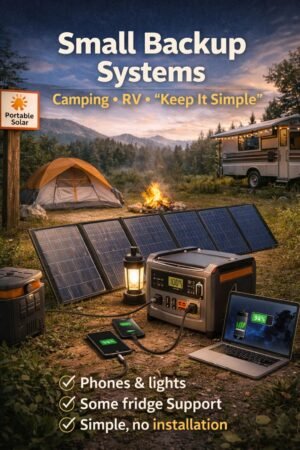
If you want something lightweight and flexible, a portable solar + a power station can cover the basics (phones, small lights, devices, and some fridge support, depending on size).
➡️ Read next: Portable Solar Panels for Camping, RVs, and Emergencies
6) Costs & pitfalls (what surprises people)
Small backup systems are also becoming increasingly popular among microhomesteaders. For instance, portable solar generators are a favorite for those who frequently camp or travel. These devices are lightweight, easy to set up, and can provide essential power to charge devices or run small appliances. Many users find that they can power their essential items without the need for a complex system.
Backup power gets expensive when you accidentally trigger “extras” (panel upgrades, electrical work, trenching, re-roofing, etc.).
Being proactive about backup power for microhomesteads can save you from future challenges.
Make sure your backup power for microhomesteads is adaptable to changing conditions.
➡️ Read next: Hidden Costs of Solar: Avoid Budget-Killing Surprises
Ultimately, your backup power for microhomesteads plan will define your resilience in the face of outages.
Understanding the costs associated with backup power systems is crucial. It’s advisable to budget for both the initial investment and ongoing maintenance costs. Many microhomesteaders report that while the setup can be costly, the peace of mind and security that comes with being prepared for outages is invaluable. Planning ahead can significantly reduce the likelihood of encountering unexpected expenses.
Next step
If you’re new, start with:
Backup power for microhomesteads plays an important role in achieving greater self-sufficiency.
Finally, always stay informed about advancements in technology and new energy solutions. The renewable energy sector is evolving rapidly, and staying updated can help you make the most efficient choices for your backup power system.
As you navigate this journey, remember that community resources are invaluable. Many microhomesteaders share their experiences through blogs, workshops, and forums, offering advice on what has worked for them. Engaging with this community can provide insights that you might not find in commercial resources.
And if you’re still deciding your overall system type:
Emphasizing backup power for microhomesteads in your planning will yield substantial benefits.
In conclusion, investing in backup power for microhomesteads is about more than just technology; it’s about committing to a sustainable and self-sufficient lifestyle. By carefully examining your specific needs, engaging with the community, and continuously adapting to new information, you can create a robust and effective backup power system that supports your microhomestead’s unique lifestyle.
Assessing your backup power for microhomesteads options is crucial for long-term success.
Building a robust backup power for microhomesteads system should always be a priority.
Finally, reflect on your personal goals for your microhomestead. Are you aiming for complete self-sufficiency, or do you prefer a balance between grid reliance and renewable resources? This clarity will guide your decisions and help you prioritize elements of your backup power system effectively.
In conclusion, investing in backup power for microhomesteads isn’t just about the technology; it’s about creating a lifestyle that embraces preparation, sustainability, and independence. By carefully evaluating your needs and exploring diverse options, you can design a system that not only meets your energy requirements but also aligns with your values and aspirations.
Remember that your backup power for microhomesteads system impacts your overall lifestyle.
When planning your system, be sure to think long term. Maintenance and replacement costs should be factored into your budget so that your microhomestead remains functional and resilient for years to come.