Critical Loads List: What to Back Up First (Fridge, Wi-Fi, Lights & More)
Make a critical loads list fast: pick essentials, estimate watts + hours, plan for surge, and size your backup system without overspending.
When the power goes out, most of us do the same thing:
We stare at the dark house and think, “Okay… what do I actually need right now?”
And then we panic-buy solutions based on vibes. (Been there.)
This post is the fix. You’re going to build a Critical Loads List—a short, realistic list of devices you must keep running during an outage—so your battery sizing and backup plan finally make sense.
If you’re new to the whole backup power topic, start here first:
Backup Power for MicroHomesteads
TL;DR (Skim Box)
- Your critical loads list is the foundation of backup power.
- Start with: fridge/freezer, Wi-Fi, a few lights, fans, medical devices.
- Estimate watts + hours/day, then add surge for motors (fridge, pumps).
- Don’t try to back up “everything” on day one. Build a “survive” list first, then upgrade later.
- Next step after this list: Battery Sizing 101
What “critical loads” means (in normal human language)
Critical loads are the things that keep your home:
- safe (lights, communication)
- livable (fans, basic comfort)
- healthy (medical devices, safe food storage)
It’s not about comfort-first. It’s about keep-running-first.
Step-by-step: build your Critical Loads List (10 minutes)
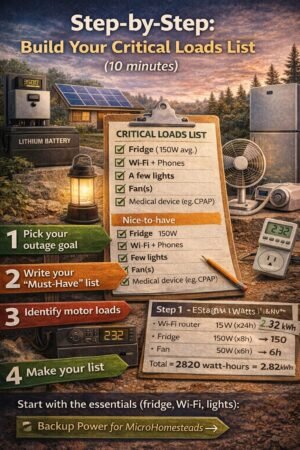
Step 1) Pick your outage goal
Choose one:
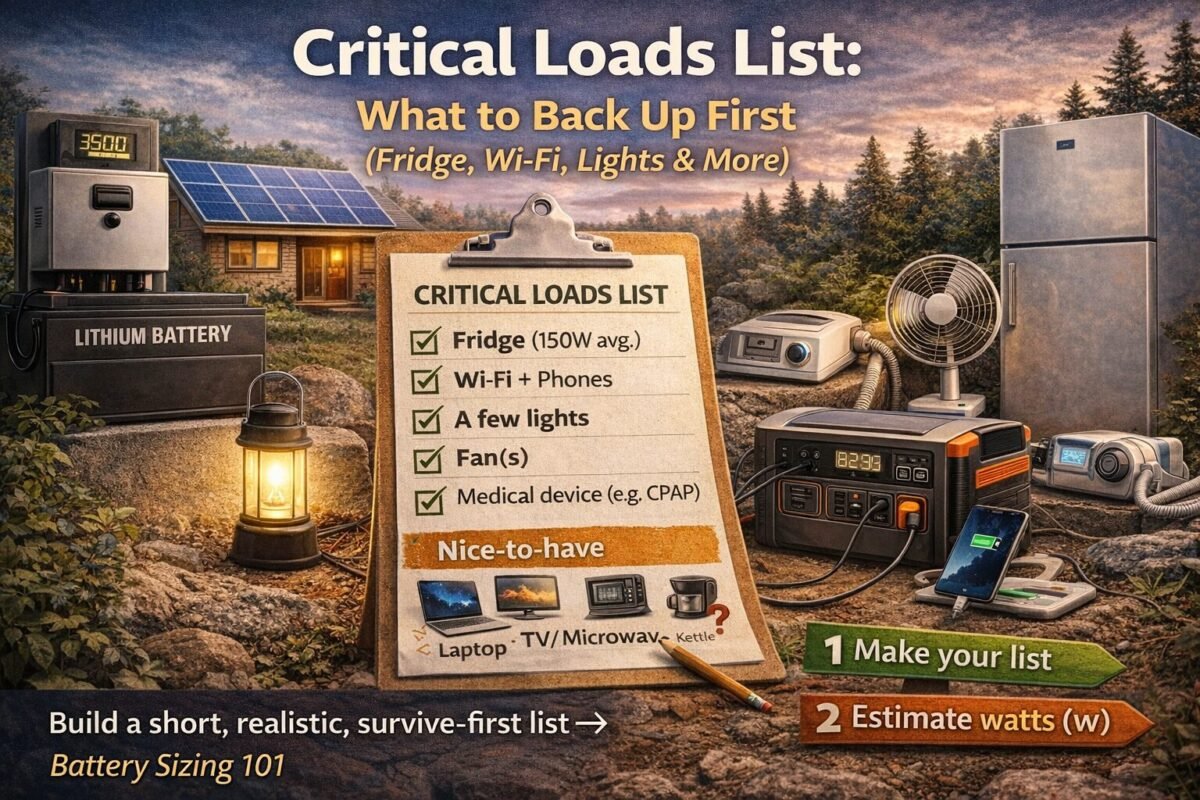
Goal A: “Keep it running”
- Fridge/freezer
- Wi-Fi + phones
- A few lights
- Fan(s)
- Medical device (if needed)
Goal B: “Comfort mode”
Everything in Goal A, plus things like:
- microwave sometimes
- TV/laptop for longer use
- more fans
- maybe a small window AC (this gets battery-hungry fast)
Goal C: “Whole-home”
This is where you start talking about:
- central AC
- well pumps (if applicable)
- larger inverter capacity
- more battery
- likely a subpanel plan
Related reading (system style matters):/grid-tied-vs-off-grid-solar-which-system-fits-you/
Step 2) Write your “Must-Have” list (start small)
Here’s the “don’t regret it later” starter set:
- Fridge
- Freezer (if you have one)
- Wi-Fi/router
- Phone charging
- A few LED lights
- One fan per sleeping area
- Medical devices (CPAP, oxygen concentrator, etc.)
If you stop here, you’re already ahead of 90% of people.
Step 3) Add “Nice-to-have” (optional)
These are easy to add later, but don’t start here:
- Microwave (short bursts)
- Coffee maker/kettle (short bursts, big watts)
- Laptop/office gear
- TV
- Extra lights
- Small tools charging
Step 4) Identify “motor loads” (surge matters)
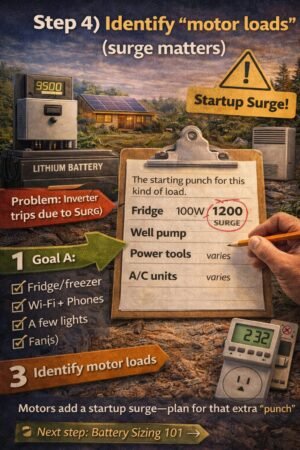
These loads may need a startup surge:
- fridge/freezer compressors
- well pump
- sump pump
- some power tools
- some AC units
This is the part that trips inverters.
If you want a simple explanation of the difference:
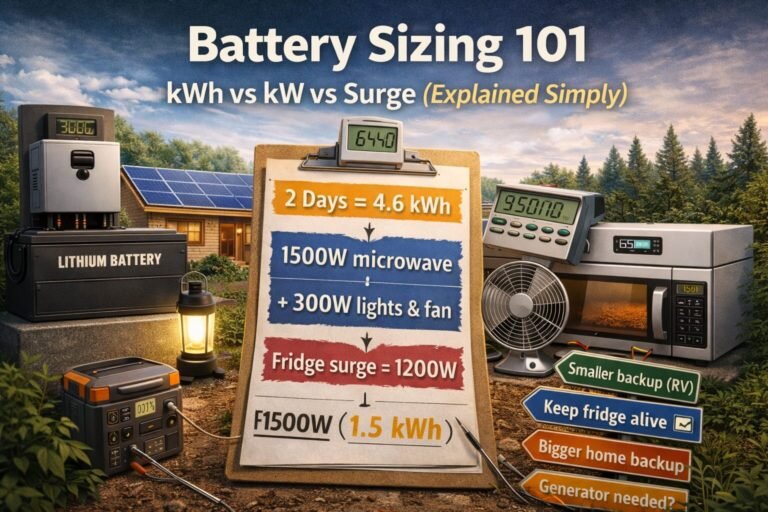
Battery Sizing 101 (kWh vs kW vs Surge)
Quick reference table: common critical loads (ballpark watts)
These are “starter estimates.” If you can, measure real usage with a plug-in power meter.
| Load | Typical running watts | Surge? | Notes |
|---|---|---|---|
| Wi-Fi router | 10–20W | No | Easy win, run it 24/7 |
| Phone charging | 5–20W | No | Multiply by number of devices |
| Laptop | 30–90W | No | Depends on workload |
| LED light (each) | 8–15W | No | Multiply by how many |
| Fan | 20–80W | No | Big comfort per watt |
| Fridge (average) | 100–200W | Yes | Cycles; start surge |
| Chest freezer (average) | 80–150W | Yes | Cycles; start surge |
| Microwave | 800–1500W | No | Big peak, short use |
| CPAP | 30–60W | No | Some use more with humidifier |
| Well pump | varies a lot | Yes (big) | Treat as “special load” |
Want to understand why solar doesn’t help at night without storage?
Printable worksheet (copy/paste)
Paste this into Notes, a Google Doc, or print it.
Critical Loads Worksheet
- Load:
- Running watts (W):
- Hours/day used:
- Daily energy (Wh/day): watts × hours
- Surge? (Y/N):
- Priority: Must / Nice / Later
- Notes: (extension cord? hardwired? needs subpanel?)
If you want the math-ready version, your next step is the battery sizing post
My “microhomestead-style” critical loads list (example)
Here’s a realistic list I’d start with for most small homes:
Must-Have
- Fridge
- Wi-Fi + phone charging
- 4–8 LED lights
- 1–2 fans
- Medical device (if needed)
Nice-to-have
- Laptop
- Microwave (short bursts)
- Extra fan for daytime
Later
- AC
- Water heater
- Dryer, oven, big resistive loads
That’s the mindset: survive → comfortable → whole-home.
Where people blow the budget (and don’t realize it)
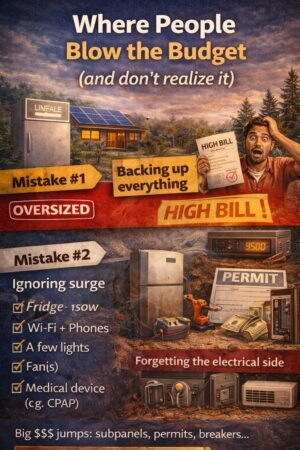
This is the “it sounded simple until…” section.
Mistake #1: Backing up everything
This is how you accidentally size your system for your entire lifestyle instead of your actual outage needs.
Mistake #2: Ignoring the surge
A fridge can look like “150W” and still trip a weak inverter.
Mistake #3: Forgetting the electrical side
Critical loads often lead to extra work:
- subpanel plans
- wiring changes
- permits
- main panel constraints
That’s why I always tell people to read this early:/hidden-costs-of-solar-avoid-budget-killing-surprises/
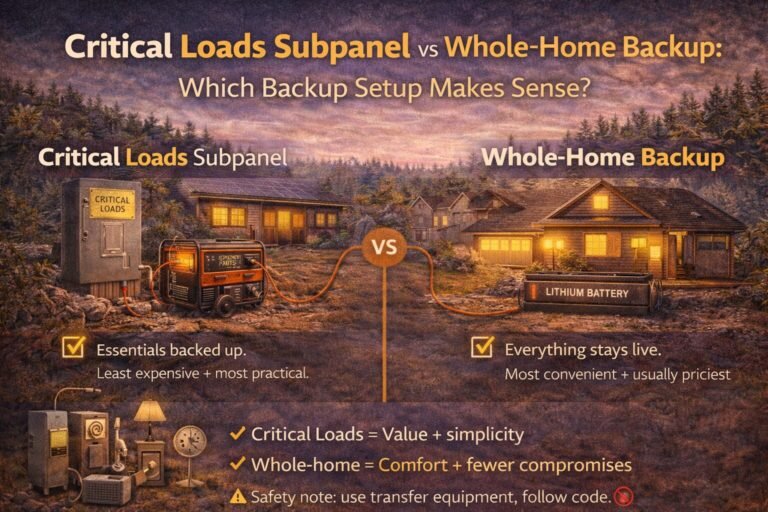
Do I need a critical loads subpanel?
Maybe. Here’s the simple rule:
- If you’re doing portable power stations + extension cords, you may not need one (just be safe and realistic).
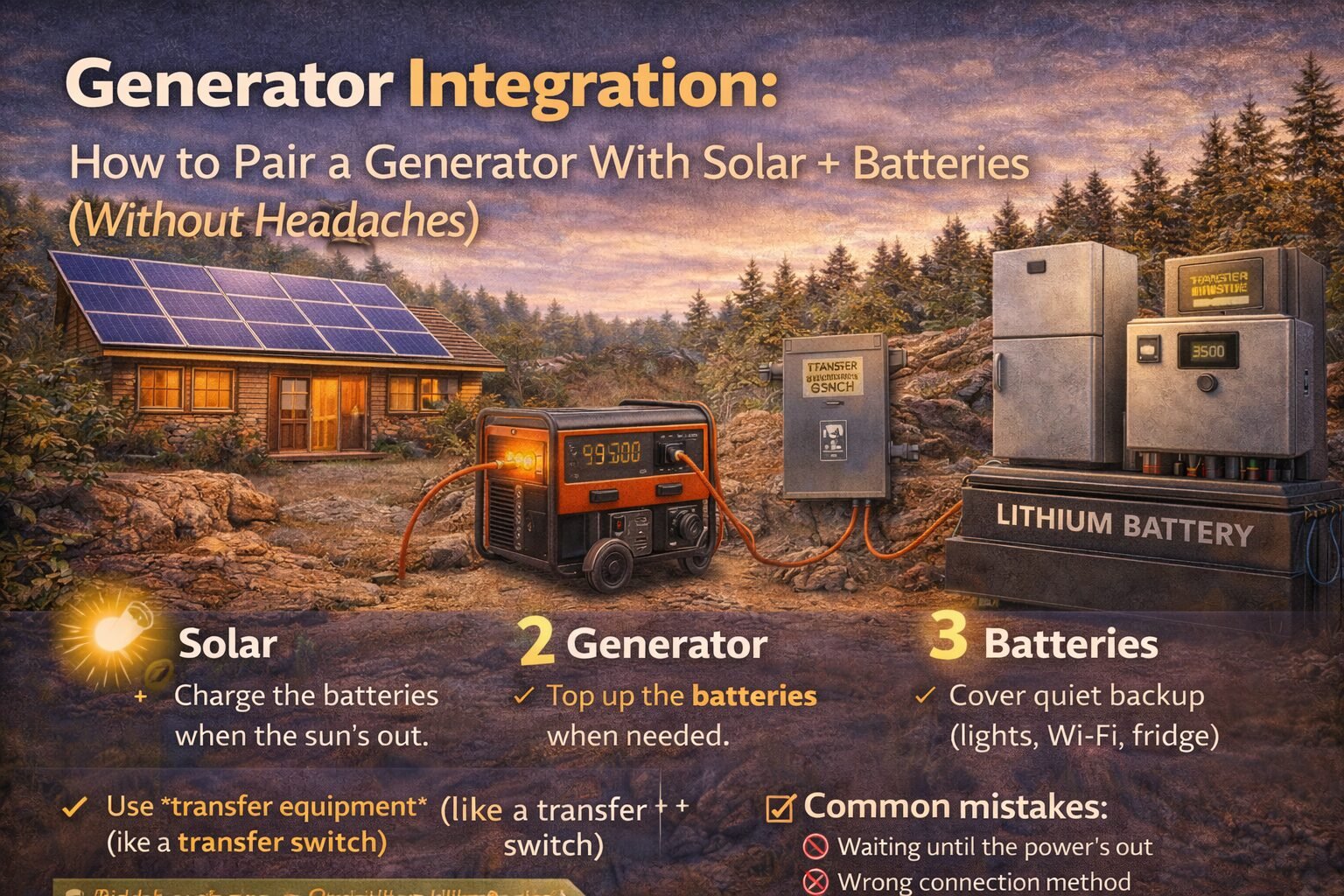
- If you’re doing whole-home backup or hardwired battery systems, a subpanel (or other load management plan) is common.
If you want to understand the building blocks, this helps:/solar-panel-system-components-explained/
“Keep it simple” options (camping/RV style)
If your goal is lights, phones, Wi-Fi, and maybe limited fridge support, small systems can work well.
Start here:/portable-solar-panels-camping/
Safety note (please don’t skip)

Anything involving your electrical panel, transfer equipment, or permanent wiring should be handled by a licensed electrician and follow local code. This post is educational only.
FAQ
What are the most important critical loads?
For most homes: fridge/freezer, Wi-Fi/phones, a few lights, and fans. Add medical devices if needed.
How do I estimate my fridge’s energy use?
Best method: measure with a plug-in meter over a day or two. If you can’t, use a conservative estimate and build in a cushion.
Can I run a fridge from a small power station?
Sometimes—especially short-term—but fridges have surge and cycle behaviour that can surprise you. Your inverter rating (kW) matters, not just battery size (kWh)./battery-sizing-101-kwh-kw-surge/
What should I do after I make my list?
Turn it into battery sizing math and pick your backup style: