Generator Integration: How to Pair a Generator With Solar + Batteries (Without Headaches)
Learn how generator integration works with solar + batteries: when it’s worth it, safe connection options, sizing tips, and common mistakes to avoid.
Understanding generator integration with solar systems is crucial for optimal performance.
Generator integration with solar offers flexibility in energy management.
With generator integration with solar, you can ensure a consistent power supply.
Proper generator integration with solar systems provides peace of mind during outages.
Utilizing generator integration with solar can maximize efficiency and save costs.
Generator integration with solar is key to a sustainable energy future.
Smart generator integration with solar systems can lower your energy bills.
Learn about generator integration with solar for enhanced power reliability.
I used to think adding a generator to a solar + battery setup was “cheating.”
Then I lived through enough real-world outage scenarios (cloudy days, weird load spikes, long restoration times) to realize something:
Generator integration with solar is becoming increasingly popular for home setups.
A generator isn’t the enemy. A generator is your “plan B” when the sun doesn’t cooperate.
The concept of generator integration with solar is essential for modern energy solutions.
If your backup goal is “hours,” batteries are often enough.
If your backup goal is “days,” generator integration with solar can be the cheapest and most reliable way to get there.
This post explains how to pair a generator with solar + batteries without creating a Frankenstein system.
This post explains how to pair a generator with generator integration with solar + batteries without creating a Frankenstein system.
New to the whole backup topic? Start here:
Backup Power for MicroHomesteads
TL;DR
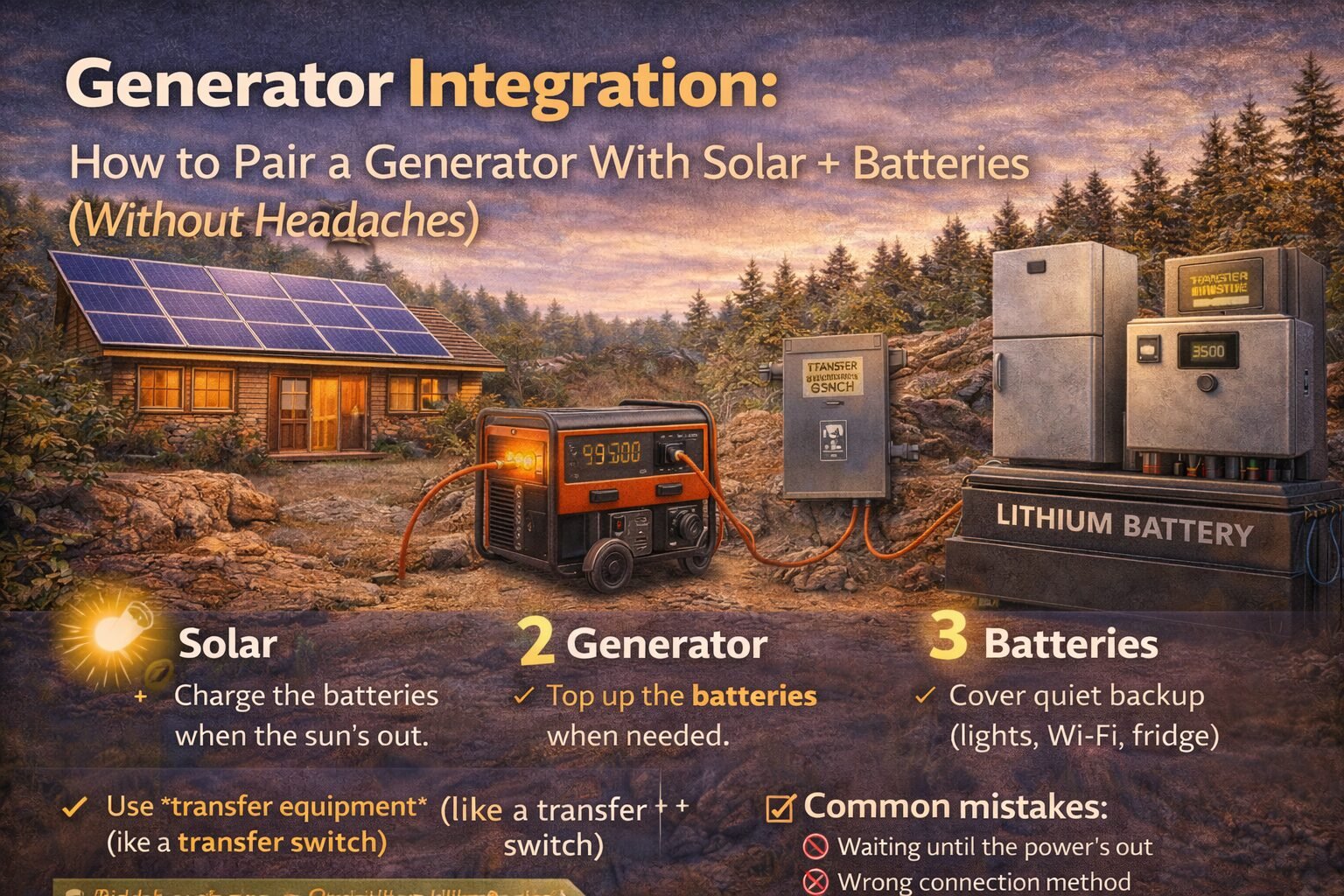
- Batteries are great for quiet, instant backup. Generators are great for long runtime.
- The “sweet spot” is often: battery covers the first 6–24 hours, generator covers multi-day stretches.
- You must integrate safely: use transfer equipment (not backfeeding).
- Size for your critical loads, not your whole house.
- Biggest mistakes: ignoring surge loads, wrong connection method, and “hidden electrical costs.”
Related:
- Critical Loads List →Critical Loads List: What to Back Up First (Fridge, Wi-Fi, Lights & More)
- Battery Sizing 101 →Battery Sizing 101: kWh vs kW vs Surge (Explained Simply)
- Hidden Costs →Hidden Costs of Solar: Avoid Budget-Killing Surprises
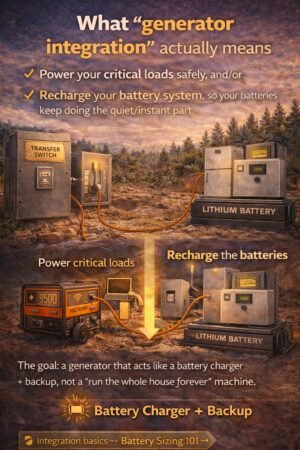
What “generator integration” actually means
Generator integration with solar is a smart choice for energy independence.
Consider generator integration with solar for seamless energy transitions.
Generator integration just means your generator can:
Generator integration with solar can provide a reliable backup during emergencies.
Ensure safety with proper generator integration with solar systems.
Generator integration with solar technology offers innovative solutions for energy users.
- Power your critical loads safely, and/or
- Recharge your battery system, so your batteries keep doing the quiet/instant part.
Explore the benefits of generator integration with solar for your home or business.
Effective generator integration with solar can enhance sustainability efforts.
The best systems use the generator as a battery charger, not as a “run the whole house forever” machine.
Generator integration with solar ensures a greener solution for energy needs.
When a generator makes sense (and when it doesn’t)
A generator is usually worth it if…
Utilizing generator integration with solar systems can help reduce reliance on fossil fuels.
- You want multi-day backup, and your area gets cloudy storm stretches
- You rely on a freezer, medical equipment, or a home office
- You have high surge loads (pumps, motors) that can trip smaller battery inverters
- Your budget is limited, and you’re deciding between “more battery” vs. “generator plan.”
Generator integration with solar helps manage energy costs effectively.
Compare options to find the best generator integration with solar for your needs.
Generator integration with solar allows for a more adaptive energy approach.
A generator might be unnecessary if…
Maximize your energy resources with generator integration with solar.
- Your outages are short and rare
- Your solar can reliably recharge your batteries daily (no major cloudy stretch risk)
- You’re happy with “overnight only” backup
Generator integration with solar is vital for energy efficiency in the modern home.
Consider professional guidance for successful generator integration with solar.
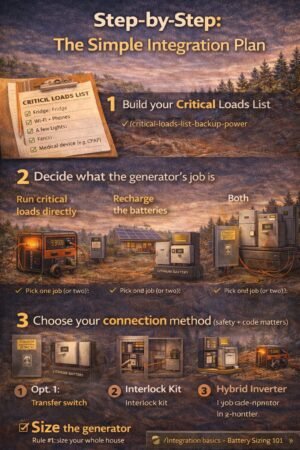
Step-by-step: the simple integration plan
Explore the innovations in generator integration with solar for reliable energy solutions.
This is the cleanest way to think about it:
Step 1) Build your Critical Loads List
Start here:
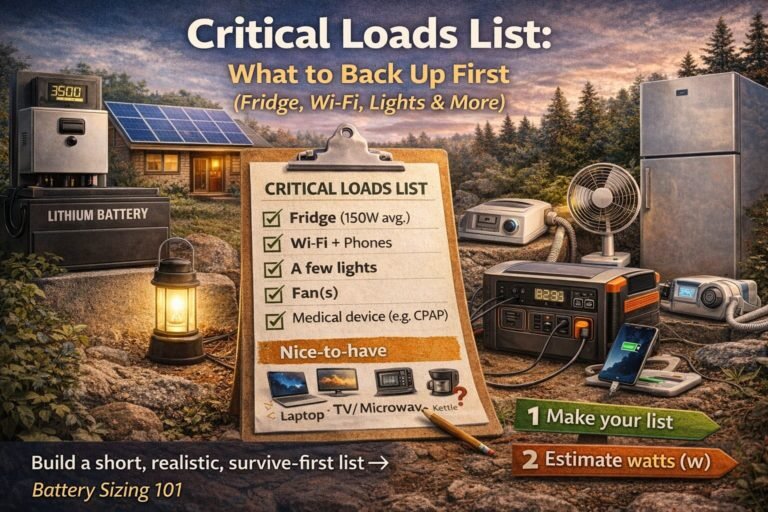
Critical Loads List: What to Back Up First (Fridge, Wi-Fi, Lights & More)
If you skip this step, you’ll oversize everything and waste money.
Step 2) Decide what the generator’s job is
Pick one job (or two):
Job A: “Run critical loads directly.”
This is common if you don’t have a battery system yet.
Job B: “Recharge the batteries.”
This is common if you have (or want) a battery system and you want the generator to run less often.
Job C: “Both”
A lot of hybrid setups can do both, depending on the equipment.
Step 3) Choose your connection method (safety + code matters)
This is the part where I’m going to be blunt:
Do not backfeed your home through a dryer outlet or a sketchy plug.
It’s dangerous and illegal in many places, and it can put utility workers at risk.
Here are the legit options you’ll hear about:
Option 1: Transfer switch (common, clean)
- Designed to safely switch your home/critical loads between the grid and the generator
- Often used for “generator → loads” setups
- Can be manual or automatic (more expensive)
Option 2: Interlock kit (often cheaper, still legit when installed correctly)
- Mechanically prevents the main breaker and generator breaker from being on at the same time
- A cost-effective solution in many homes
- Still needs correct installation and labeling
Option 3: Hybrid inverter/battery system with generator input
- Many battery/inverter systems can accept generator input and manage charging
- This is usually the “smoothest” user experience if you’re building a solar+battery system anyway
Safety note: anything involving your panel, transfer equipment, or permanent wiring should be done by a licensed electrician and meet local code. This is educational.
Step 4) Size the generator (the practical approach)

Generator sizing is where people either overspend or regret everything.
Generator integration with solar enhances the resilience of power systems.
Rule #1: Size for critical loads, not your whole house
Efficient generator integration with solar is essential for modern homes.
Achieve energy independence through generator integration with solar systems.
If your critical loads are:
- fridge + freezer
- Wi-Fi + lights
- fans
- laptop charging
…you usually don’t need a monster generator.
Rule #2: Respect surge loads
Motors (fridge compressors, pumps) have a startup surge. If you have a well pump, treat it as a special case.
If you want the simple breakdown of kW vs surge:
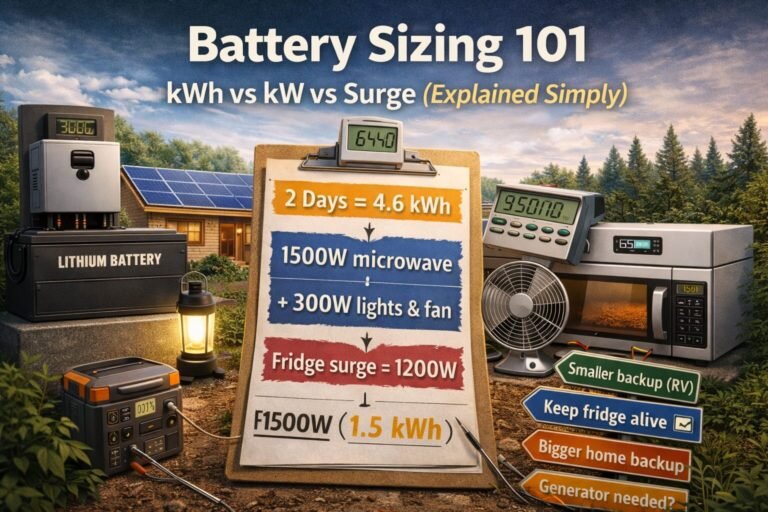
Battery Sizing 101: kWh vs kW vs Surge (Explained Simply)
Rule #3: Decide your generator “strategy”
There are two strategies I see most often:
Strategy A: “Run everything directly.”
Learn how generator integration with solar technology can benefit your lifestyle.
Generator integration with solar allows for seamless energy management.
- Generator must handle peak loads + surge
- More fuel use, more noise time
Strategy B: “Charge batteries + let batteries run loads”
- The generator runs in shorter bursts
- Batteries handle peaks and surges
- Usually quieter overall and can be easier on fuel
The “battery + generator” pattern that works really well
Here’s the pattern I like for microhomesteads:
1) Batteries cover the immediate outage
- No noise
- No warm-up
- Keeps essentials stable
2) Generator kicks in only when needed
- Recharge batteries
- Carry you through long cloudy stretches
- Prevents battery depletion anxiety
3) Solar helps whenever it can
- Every sunny hour reduces fuel runtime
This creates a system that feels calm instead of chaotic.
Common mistakes (that cause headaches or cost money)
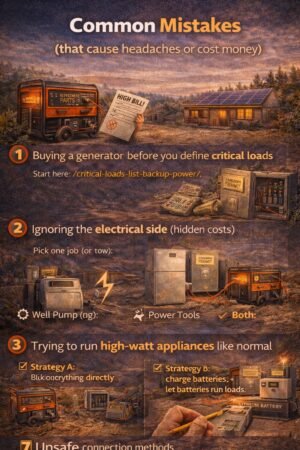
Mistake #1: Buying a generator before you define critical loads
That’s how you end up with a generator sized for “everything,” then you hate the fuel use and noise.
Start here:
Critical Loads List: What to Back Up First (Fridge, Wi-Fi, Lights & More)
Mistake #2: Ignoring the electrical side (hidden costs)
Integration can trigger:
- panel work
- permits
- breakers, wiring, conduit
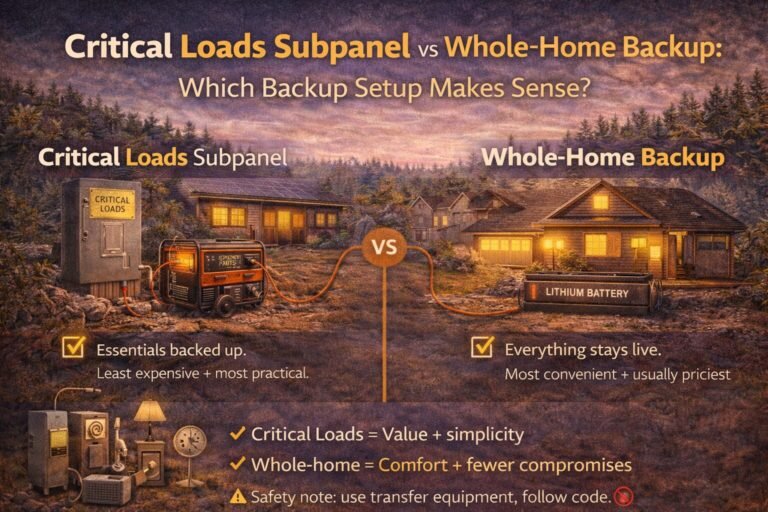
- critical loads subpanel decisions
Read this early so you’re not blindsided:
Hidden Costs of Solar: Avoid Budget-Killing Surprises
Mistake #3: Trying to run high-watt appliances like normal
Electric ovens, dryers, water heaters, and central AC… these can turn a “simple backup” into a major system.
Mistake #4: Unsafe connection methods
If you take one thing from this post, use transfer equipment and do it right.
Generator integration + “keep it simple” (portable approach)
If your backup setup is portable (camping/RV style), generator integration often looks like:
- generator → power station charger
- generator → battery charger
- generator → small loads directly (safe, designed connections)
If you’re going small and flexible, start here:
Portable Solar Panels for Camping, RVs, and Emergencies: Simple Guide
FAQ
Can I charge a solar battery with a generator?
Often yes, depending on your inverter/charger setup. Many systems are designed for this, but it depends on the equipment and wiring.
Is a generator cheaper than adding more batteries?
Often, yes—especially if you’re trying to cover multi-day outages. Batteries are incredible, but adding lots of kWh gets expensive fast.
Do I need an automatic transfer switch?
Not necessarily. Manual setups work fine for many people. The “right” answer depends on how often you’ll use it and how hands-off you want it.
What’s the safest way to connect a generator to my house?
A properly installed transfer switch or interlock kit (or a hybrid system designed for generator input). Always follow local code and use a licensed electrician.
Next step
- Build your list: Critical Loads List →Critical Loads List: What to Back Up First (Fridge, Wi-Fi, Lights & More)
- Do the math: Battery Sizing 101 →Battery Sizing 101: kWh vs kW vs Surge (Explained Simply)
- Then decide whether your generator should:
- run loads directly, or
- mainly recharge batteries, or
- do a bit of both